Keshuma City
Comfort is the cage. Memory is the price.
The primary setting of Final Bosu: a vast, layered metropolis on Level 1 of the system. The city runs on rigid order and fashionable conformity, and it is designed to control every part of a citizen's life.
Keshuma City is the city inside Chutoria, the world. It is where the IDs live, everyone except the Kazegami, who live outside the walls as outlanders.
What does it feel like?
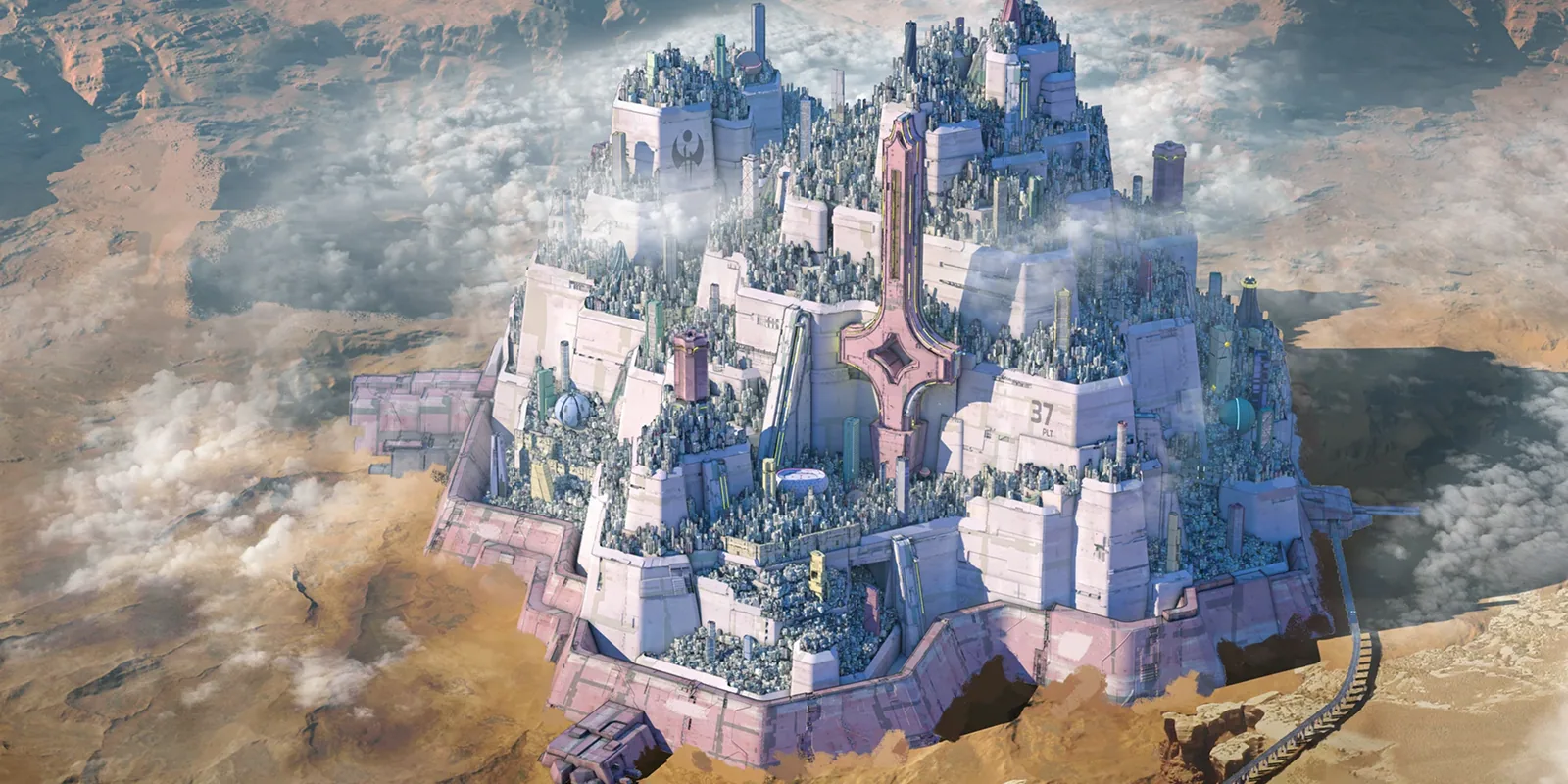
Inspired by Kowloon Walled City, Keshuma is a retro-futuristic dystopia of dense, stacked blocks tangled in pipes. Cozy but cramped. The streets are busy and messy, the air hangs with smog and mist, and its people live oppressed. The city calls all of it care: control is care.
How do people live?
Keshuma is stacked vertically as well as split into districts, in three bands. The Upper Districts hold the sunlight, the resources and the longest-memory elite. Most people live in the Mid-Level Districts. The Lower Districts and the Mujin Base sit closest to loss. Height is caste.
- Mid-level life revolves around protecting your MEM and keeping your identity. Work, MEM-scan checkpoints, status and social pressure all turn on one goal: keeping enough memory to remain yourself, tracked on a visible MEM capacity meter.
- Daily life is queue, trade, gossip, hide, bargain and stay stable. People exchange MEM for goods, and memory pressure decides what you can afford to hold onto.
- The city asks for obedience and low growth, and pays in safety, order, a managed return and a place in the system. Beyond the walls lies the desert edge, with its danger and its freedom, where responsibility replaces routine.
How is it built?
Towering walls separate the districts and restrict movement, and citizens are confined to their designated places. The districts are sorted in rings that set each one's MEM allowance and quality of life. The inner zones, home of the upper-class Dukes, eat the best MEM food and get the most favourable Support Center treatment; the outer zones hold the precarious labour pool.
The city is divided into District, Zone and Block, the units the Kaichukan command maps onto. A Crimson Captain holds a Block; a District Commander reads a whole District.
The districts climb like a staircase. Each sits one floor up from its neighbour, so the city reads as an ascending stack of plateaus, and the walls between them are colossal vertical faces dropping thousands of metres into blue-grey mist. Moving up happens one level at a time.
Each district is a closed-off little world with its own Kaichukan commander and its own rules, and the rules change from district to district. A district can fall into chaos when the Kaichukan lose control, and other districts then try to take it over. There are no hard borders between factions: IDs live side by side as neighbours, and one family can hold different IDs. Higher districts can lean Kodaka; lower districts hold far more Mujin.
Government buildings are imposing and marble-like, with long corridors, statues and reflecting water. The government inside them is corrupt.
How do people get around?
There are no personal vehicles. People move by escalators, moving walkways and elevators, and the city feels like an endless shopping mall, sold as comfort. The escalators keep people from walking, because walking is growth.
Passage between districts is gated and scanned. Some districts sit outside Kaichukan control, the black zones on the map.
Keshuma prints its food. The same Metora energy that respawns a body also makes food and other resources, so the city needs no farms and little from outside.
Keshuma City is the only city. The Kazegami live apart, out in the Outlands. The city shows no visible way out; smuggling doorways exist, but most illicit work, printing and tampering with memory, happens inside.
Landmarks
- Keshuma Station is the respawn processing terminal at the city's edge, where the Respawn Express arrives.
- Support Centers are the regulated healthcare and memory-extraction facilities in every district.
- Kobans are street-side police stations, where Patrol Officers handle MaxTag and MEMO-Pug checks, Growth Path monitoring and citizen complaints.
- At Kaichukan Academy, cadets learn the four enforcement disciplines (Sensory Dampening, Memory Shields, Emotion Blockers and Identity Fortification) before earning rank.
- The Joint is the black-market memory marketplace.
- MEM reclamation is where the city's lower workforce processes recycled MEM, matter that was once people's memories.
What hides in its walls?
The Hidden Legacy Catacombs are buried within the walls: ancient sites with hieroglyphs, sealed doorways and the Artefact. The city itself is one layer of a larger, multi-level system.

Comments